Engagement Rings for Men: How do you choose?

Choosing a ring for him shouldn’t be guesswork. Start with the parts that decide whether he’ll wear it every day: width, profile, metal and, if you add one, a stone. Get those right, and the style follows. The goal is a stylish engagement ring for men that feels natural on the finger and stands up to daily wear. Put comfort and durability first, then refine the details, so the ring feels like him, every day, without a second thought.

Key takeaways

  • Lifestyle first: Daily routine decides width, profile and metal long before decoration does.
  • Comfort wins: Comfort-fit interiors and low profiles keep a ring on the hand, not in a drawer.
  • Tradition is flexible: Left hand, right hand, stacked—choose what’s secure and practical.

What makes a stylish engagement ring for men: fit before decoration

Style comes from precision engineering. Three choices do most of the work:

  1. Interior shape (comfort-fit): A slight inner curve helps the ring slide over the knuckle and sit well when hands swell with heat or exercise.
  2. Profile height: Low to medium profiles clear gloves, pockets and steering wheels.
  3. Edge shape: Rounded edges feel easy; flat or bevelled edges look sharper. Pick based on his wardrobe and how tactile he is with his hands.
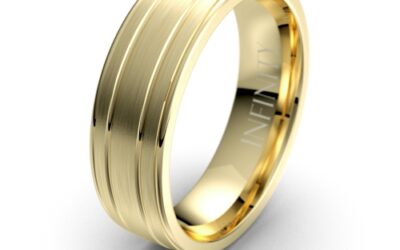
  4. Finishes: Brushed and matte hide scuffs. High polish looks crisp but shows marks sooner. Hammered textures disguise wear and add a crafted feel. Choose the finish that matches his job, sport and habits.

Choose the correct width

Most men choose between 4 and 8 mm. As a simple starting point, try 6 mm, balanced on most hands.

  • Slim fingers often look clean at 4–5 mm. 
  • Broader hands handle 6–8 mm without feeling bulky.

Test two or three widths side-by-side, then do a pocket test (hand in pocket), a keyboard test and a grip test (bottle, barbell, steering wheel). Comfort decides the winner.

Pick the profile and edge shape

Lower profiles snag less and fit under gloves. Rounded edges are kinder to skin and knitwear; flat or bevelled edges give a graphic line but can feel squarer. Pair a low profile with comfort-fit, and you’ve already solved most wearing issues.

Men’s engagement ring design: choose a metal that suits his life

Pick metal by four factors: colour, weight, durability and serviceability (resizing/repairs).

  • Platinum: Naturally white, dense and durable. Keeps its colour, develops a soft patina, and suits sensitive skin. Resizable and serviceable for decades.
  • Gold (yellow, white, rose): Classic and easy to resize. Yellow is warm and traditional; white is clean and modern; rose is flattering and pairs well with black, navy and earth tones. White gold usually needs occasional rhodium replating to stay bright.
  • Titanium: Very light and strong—ideal if he doesn’t usually wear jewellery. Resizing can be limited, so aim for accurate sizing from the start.
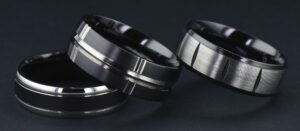
  • Tungsten: Extremely scratch-resistant with a modern look. Usually not resizable and can fracture under a hard impact; ask about size-exchange policies.
  • Tantalum/Zirconium/Ceramic: Modern colours and lighter feel. Comfortable and distinctive; check resizing and breakage policies so there are no surprises later.

Quick rule: If his hands see tools, weights or bikes, choose brushed/matte, keep edges simple, and avoid tall settings.

Gold options: yellow, white or rose

  • Yellow gold: Heritage warmth; suits vintage-leaning styles and warmer skin tones.
  • White gold: Clean, contemporary; works with monochrome wardrobes and sharp tailoring.
  • Rose gold: Soft, versatile tone; flattering on many skin tones and easy to mix with watches.

For purity, 18ct gives richer colour and prestige; 14ct and 9ct add alloy hardness and value. Any of the three can anchor a man’s engagement ring design, match the hue to what he wears most.

An engagement diamond ring for men: low-snag, low-profile settings

Diamonds can be low-key. The setting decides whether they snag or stay put.

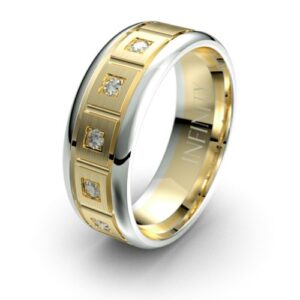
  • Flush (gypsy) set: Stone sits level with the band; nothing to catch on clothing.
  • Bezel set: A narrow rim of metal protects the edge; clean outline, strong everyday choice.
  • Channel set: Small stones sit between two rails for a neat line of sparkle.

For a diamond engagement ring for men, consider a modest carat and a low setting. One small round or princess cut is subtle; a black diamond adds contrast; a deep blue sapphire adds colour without glare. Choose stones for toughness as well as looks if the ring will see hard use.

Where to put an engagement ring for men: left, right or stacked

The typical spot is the left-hand ring finger. Some men keep it there after the wedding; others move it to the right hand or stack it with a band. Job and sport matter: for gloves or contact sports, a lower-profile ring on the non-dominant hand can be the practical answer. There isn’t a single rule: comfort and security should decide where he wears it.

Sizing: get the fit he’ll actually wear

  • Measure later in the day when hands are warm.
  • If the knuckle is larger than the base, size to pass the knuckle with a firm push; it should sit snugly once on.
  • Consider half sizes if the weight fluctuates.
  • Comfort-fit interiors help alleviate swelling and fatigue on long days.
  • Lower profiles and smooth edges make keyboards, pockets, and gloves easier to use.

Care: quick cleaning and long-term upkeep

  1. At-home clean:
  • Warm water, a drop of mild washing-up liquid
  • Gently brush with a soft toothbrush
  • Rinse and pat dry
  1. Annual check-ups: Catch loose stones and worn claws early.
  2. Avoid: Harsh chemicals and heavy impacts.
  3. White gold: May need occasional rhodium replating.
  4. Tungsten & ceramic: Generally not resizable—confirm size-exchange before you buy.

Ready to choose?

We suggest you lay out three test rings: two widths (for example, 5 mm and 6 mm), two finishes (brushed and polished) and one option with a flush-set stone. Try the pocket, keyboard and grip tests. The right men’s engagement ring design will feel obvious in minutes.

Book a private engagement ring consultation to compare metals, settings and stones, then create a custom design that suits your budget and lifestyle. Our jewellers offer in-house customisation, nickel-free white gold options and ongoing care. 

Contact us to book your consultation today.

FAQs

1) What metal suits a hands-on job?

Platinum takes daily knocks and keeps its colour. Tungsten resists scratches but usually can’t be resized. Titanium is light and tough—check resizing options first.

2) What width works for larger hands?

Start at 6 mm and test 7–8 mm for more presence. Comfort-fit makes wider bands easier for long days.

3) Can a man’s engagement ring include diamonds without looking flashy?

Yes. Use a flush or bezel setting, or a slim channel of accents. A quiet engagement diamond ring for men looks sharp and practical.

4) Where to put an engagement ring for men—left or right hand?

Traditionally, the left ring finger. Some move it to the right hand after marriage or stack it with a band. Choose what’s secure and comfortable for work and sport.

5) Are alternative metals a good idea?

They can be. Tantalum, zirconium, titanium and ceramic offer modern looks and lighter weight. Confirm resizing and size-exchange policies in case fit changes later.


Recent Posts

What Are The Rarest Diamonds Colours?

What Are The Rarest Diamonds Colours?

When you think of diamonds, the image of a sparkling, crystal-clear gem likely comes to mind. But every so often, nature creates something even more extraordinary—natural-coloured diamonds. These stunning gems, known as fancy-coloured diamonds, are true wonders of the...

Diamond Size Breakdown: How to Pick Between 1, 1.5, and 2-Carat Rings

Diamond Size Breakdown: How to Pick Between 1, 1.5, and 2-Carat Rings

Picking the perfect diamond size doesn’t have to be confusing, even when deciding between 1, 1.5, or 2 carats. As jewellers with generations of experience, we’re here to clear things up and guide you toward the diamond that matches your style and budget. Understanding...